

The origins of IChemE are rooted in the professionalism of the chemical engineering discipline. As early as 1880 George E Davis, considered to be ‘the father’ of the profession, suggested that the group which became known as the Society of Chemical Industry, should be named the Society of Chemical Engineers.
Spurred on by WW1 and the need for a more scientific approach to the problems of the chemical plant, more standardised training for ‘chemical engineers’ was introduced, and the Institution was formed.
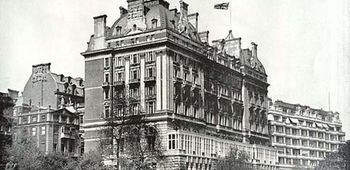
On 2 May 1922, a group of gentlemen met at the Hotel Cecil in London inaugurating an organisation that became known as the Institution of Chemical Engineers. From these humble beginnings, this group set out to lay the foundations for the modern institution we have today.
During these decades, an institutional structure was put in place, premises were secured, governance created, the first council elected, the benevolent fund set up, and professional membership grew to over 1,000 members. The Institution had a bright future to look forward to with the post-war boom in petrochemicals.
During the post-war years, fueled by the growth in petrochemical industries, IChemE’s membership grew significantly. Members were now joining from areas across the UK, and internationally. Most significantly the Royal Charter was secured, with HRH Prince Phillip becoming the first Royal Patron.
This period saw expansion of its communication to members through the publication of The Chemical Engineer, the election of the first non-British President, the relocation of the institutional headquarters to Rugby, and the inclusion of papers and thought leadership articles by related technologists presented at conferences for the first time. As a whole, the post-war years saw the organisation expand its boundaries to look beyond its origins and begin evolving into a body resembling that which we know today.
In the latter part of the 20th century and the early 21st century, the organisation grew and diversified. Additional branches were opened in Australia and Malaysia, the premises in Rugby was expanded twice to provide further office and training accommodation, and importantly the Institution began to look at the wider chemical engineering ecosystem, supporting bioengineering, environmental sustainability, and demonstrating how chemical engineers make positive contributions to society.
With a focus on governance, the organisation grew to become the vibrant membership body of over 30,000 members across the globe today. In 2022, IChemE celebrated its centenary year honouring the work of chemical engineers, past and present, and began laying the groundwork for a more sustainable future.
Creating and implementing a clear strategy is vital for IChemE’s success to ensure the Institution is aligned and focused on achieving our vision. Strategy28+ outlines our plan for the next five years, illustrating our strategic goals and how we will achieve them through championing the contribution of chemical and process engineers.