

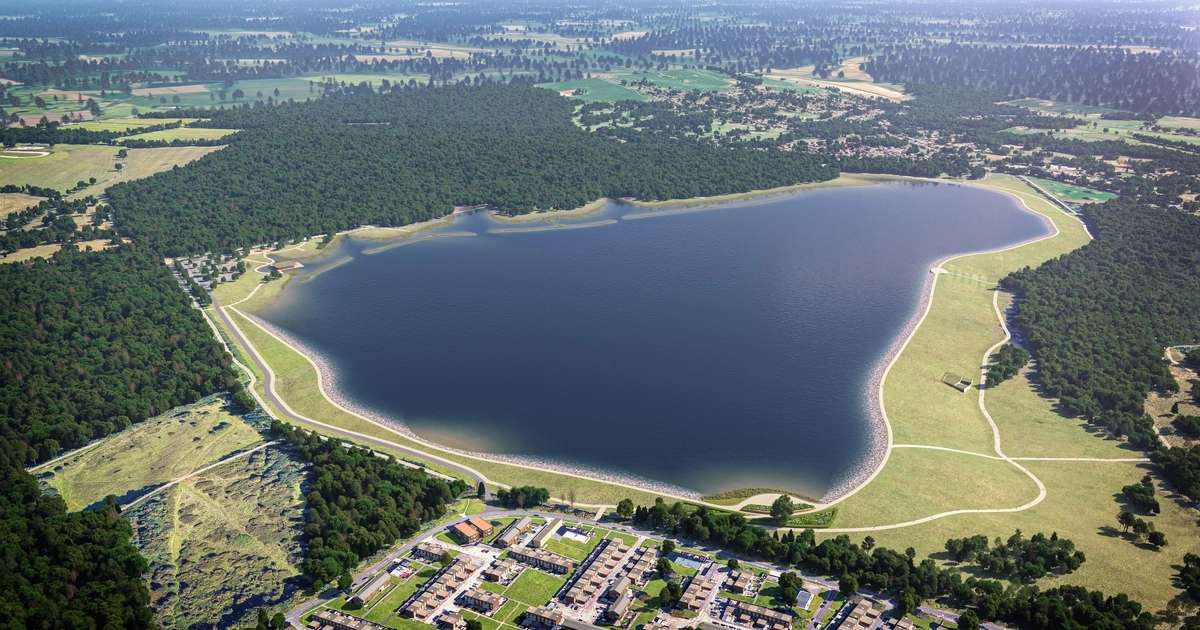
Portsmouth Water and Southern Water needed a new strategic water resource that could strengthen supply resilience as demand and drought risks increased. Existing abstraction from the region’s chalk streams, particularly the River Test and River Itchen, was no longer sustainable. Regulators required a solution that balanced a reliable water supply with environmental protection.
The project’s complexity was not limited to the reservoir itself. The site spans 160 hectares and includes supporting infrastructure such as pipelines, pumping stations and treatment works. The design also had to respect the area’s natural springs — some of Europe’s largest sources of high-quality spring water — and account for surplus water flows that would otherwise run out to sea.
Working directly for Future Water MJJV, we provided multidisciplinary civil and structural design support from concept to planning and approval. Our work helped shape a coordinated plan that combined technical precision with environmental sensitivity.
Alongside technical design, we managed environmental impact assessments, conducted archaeological and ecological studies, and engaged closely with local councils and communities throughout planning.
Construction of the trial embankment and early site works are now underway, with full completion expected in 2028. Once operational, the reservoir will store around 8.7 billion litres of water, enough to supply 21 million litres each day.
Beyond its functional role, the project will transform the surrounding landscape into more than 200 hectares of woodland, pasture and green space, complete with walking and cycling routes, a visitor centre and new habitats for native species. Storing surplus spring water and sharing supplies across networks will reduce pressure on sensitive chalk streams and protect the region’s rare aquatic ecosystems.
For local communities, the reservoir provides secure water alongside new opportunities for recreation, education and connection with nature. As part of a broader regional strategy, it contributes to a resilient and sustainable future for water in the South East.

The Take Charge project was initiated to meet the growing demand for rapid EV charging at MSAs. The primary considerations included the following:
Working directly for Future Water MJJV, we provided multidisciplinary civil and structural design support from concept to planning and approval. Our work helped shape a coordinated plan that combined technical precision with environmental sensitivity.
Our approach showcased our capability to address complex challenges through innovative and collaborative strategies:
The Take Charge project met all its objectives and delivered significant benefits:
The Take Charge project underscores our commitment to sustainable and efficient project delivery and delivering innovative, impactful solutions that benefit the community and support the transition to a low-carbon future.

We were engaged by VMO2, the UK’s largest mobile network, to assist their Business Marketing team in developing a comprehensive data mart, a repository that takes data directly from marketing sources and transforms this into an optimal format for business analysis, and dashboard aimed at enhancing performance metrics.
Following a recent merger and other organisational changes, VMO2 Business Marketing team required support to develop tools enabling them to interrogate and analyse their operating metrics. The team used various tools to generate and track business ‘leads’, but these systems are not integrated nor easy to report on. This makes it difficult for the Marketing team to analyse the Return on Investment for marketing campaigns and other factors that drive their success.
VMO2’s key requirements included having easy access to all required marketing data sources within the Google Cloud Platform (GCP) data lake and improving trust in the data. The data often contained missing or incorrect values, as well as other errors, including limited existing integration between source datasets. These challenges needed innovative approaches to data engineering, analysis and reporting.
We used extensive stakeholder engagement, alongside strong problem solving and analytical engineering approaches.
A commitment to proactive stakeholder engagement enabled the data mart and dashboards to satisfy both the strategic and tactical requirements of VMO2. We worked across three different teams within VMO2 and interfaced with both dashboard end users, external contractors, and salespeople. This enabled us to refine the initial client requirements, minimise assumptions about the data sources and ultimately, making sure that the data mart and dashboards were fit for purpose. We regularly engaged key stakeholders and users of the dashboard to help them feel ownership of the project. Our commitment to documentation and collaborative development has provided a seamless handover process, facilitating the integration of our solutions into VMO2's existing workflows.
The dashboards enabled VMO2’s Marketing team to drive evidence backed discussions with other areas of the business in efforts to improve their collective performance. The effort also highlighted some of the key data gaps that exist within VMO2’s Marketing architecture and have given the business a clear understanding of where targeted training, process standardisation and data quality checks should be implemented.
Our solution facilitated a shift in VMO2's data management practices. By embedding robust data management frameworks and fostering data-driven decision-making processes, we enabled to handle the challenges of the digital landscape more confidently and flexibly.
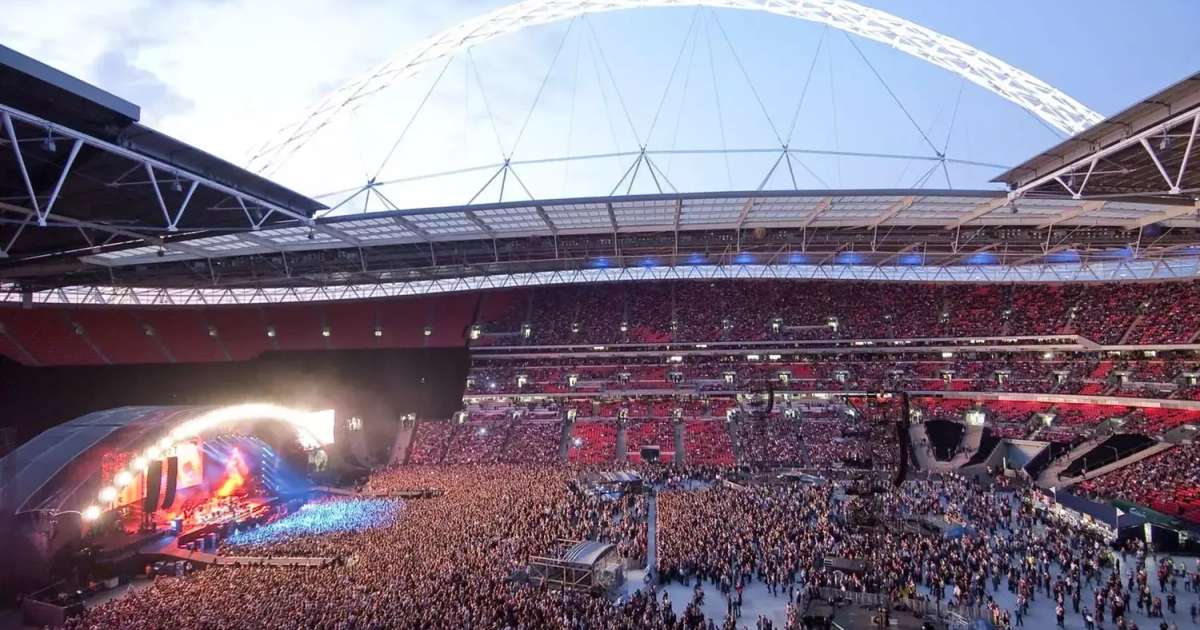
Wembley Stadium, which sits in the Wembley Park estate, is used over 40 times a year, and the key challenge has been to ensure that the emerging designs, facilities and construction activities safeguard the visitor experience; delivering capacity safety and ease of movement objectives. The task was to provide strategic counsel across a wide range of design and operation workstreams associated with the development of the masterplan for Wembley Park. The masterplan is mixed use, with residential and commercial buildings, retail, leisure, parkland and civic squares. It also provides improved provisions for event and match day visitors (e.g. car and coach parking and upgraded public transport access).
We focused on event-day pedestrian movements for both sports and music, but also considered other groups using the area. This entailed: Several site-wide pedestrian count surveys at a series of major national finals; Spreadsheet and network based pedestrian flow analysis and congestion modelling; Detailed Legion simulations of crowd movement within the site (90,000+ users); and served as experts in Planning enquiries and negotiations with the local authorities.
Importantly, visitors continued to enjoy the Wembley experience, despite the volume of regeneration work surrounding the stadium – due in part to the considered contribution of our team. There was a significant amount of reputational risk at stake for our client if visitors were inconvenienced during an event at Wembley, and our input to the planning and delivery of the masterplan was an important element of the Risk Mitigation Plan. The masterplan continues to evolve and elements of it have either already been built or are now under construction. Designs have safeguarded pedestrian movement and our input has been highly valued and instrumental in successfully securing a series of Planning approvals.