Business line: Tunnels & Underground Structures
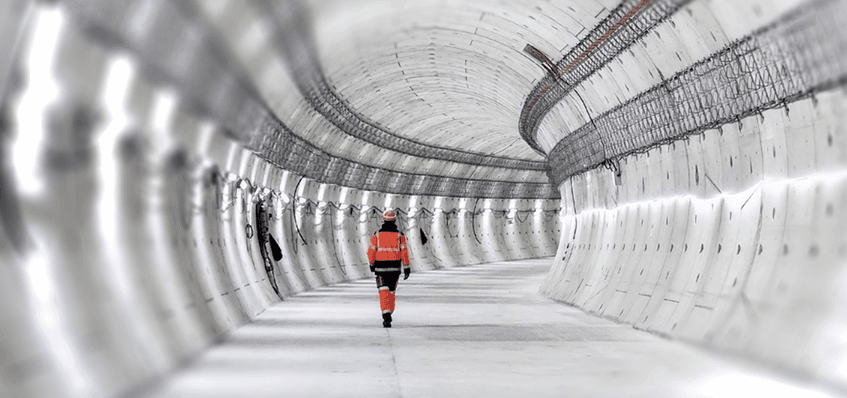
The Paris metro network "intra-muros" is very dense. But the urban development of the region, with its business districts, new cities, and airports required an organization that better connects the center to its periphery and peripheral areas to each other. In 2010, the French Parliament launched the challenge of transforming the Paris region into a world-class metropolis.
At the heart of this ambitious political approach, an infrastructure project: the creation of four new metro lines: 15, 16, 17, 18. This new network, called Grand Paris Express, is managed by the Société du Grand Paris.
The extensions of lines 11 and 14 (for which Bouygues Travaux Publics carried out lot 2 of the northern extension on behalf of the RATP) and the western extension of the RER Eole (on behalf of SNCF Réseau) complete the circular metro project.
Business line: River & Marine Work
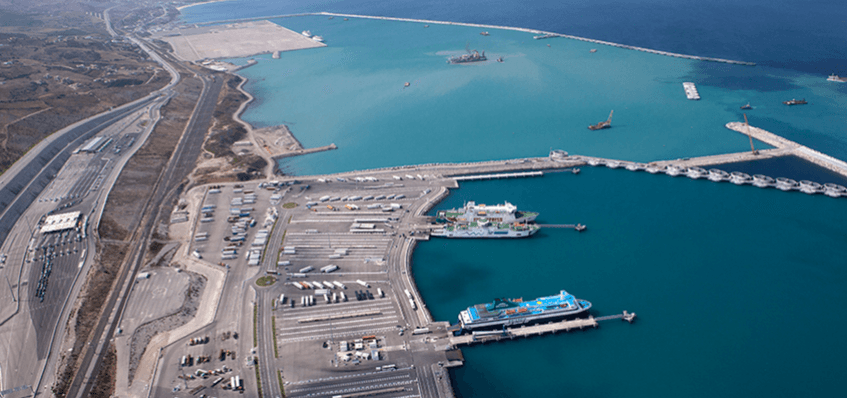
Seen as one of the essential hubs of the Mediterranean, Tanger Med ranks as one of the world’s best port complexes. Originally opened in 2007 after three years of works performed by Bouygues Travaux Public and Bouygues Bâtiment International, it can berth the world’s largest freighters.
Despite the economic crisis, it was decided in 2009 to extend the port on the west side of Tangier Med I. The Tangier Mediterranean Special Agency (TMSA) entrusted the consortium of Bouygues Travaux Public (lead company), Bymaro, Saipem, Besix and Somagec with the port extension, which was to be known as Tanger-Med II.
Tanger-Med I was a victim of its own success; the area already included two breakwater barriers, a container port and a ferry port. It was therefore important that the port have a place in the new infrastructure that would be the Tanger-Med II port. The “new” port incorporates two deepwater container terminals that provide an additional capacity of 5.2 million TEUs (Twenty-foot Equivalent Units).
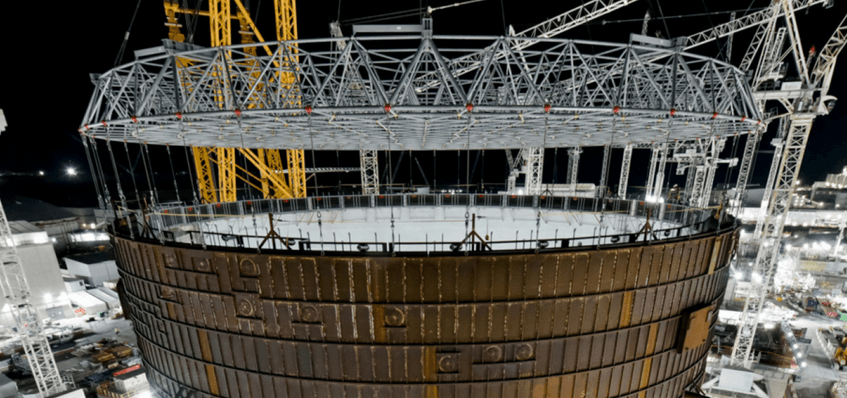
Business line: Industrial Civil Engineering
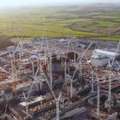
Construction of the power station that will house the two nuclear reactors.
EDF has awarded Bouygues Construction subsidiary Bouygues Travaux Publics, working as part of a consortium with the British company Laing O'Rourke, the contract to construct the buildings that will house the two European Pressurized Reactor (EPR) nuclear reactors at Hinkley Point C in the UK.
With a total capacity of 3.2 gigawatts, the Hinkley Point C plant will supply 7% of the UK's electricity consumption and provide electricity to over 5 million homes.
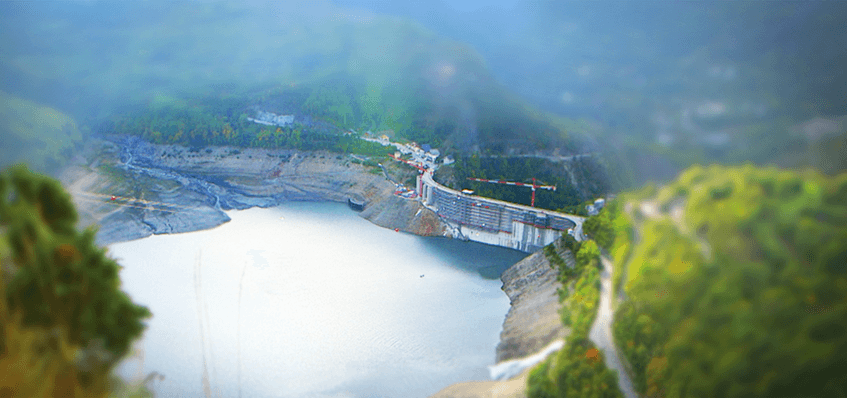
Business line: Rehabilitation
Consolidation of the upstream facing and partial renovation of the downstream facing.
Installing a composite material grid mesh on the upstream facing, itself anchored to the body of the structure by adjustable prestressed anchor rods, and partial renovation of the downstream facing.
The consolidation work is designed to solve three problems observed on the dam, mainly caused by the alkali-aggregate reaction phenomenon:
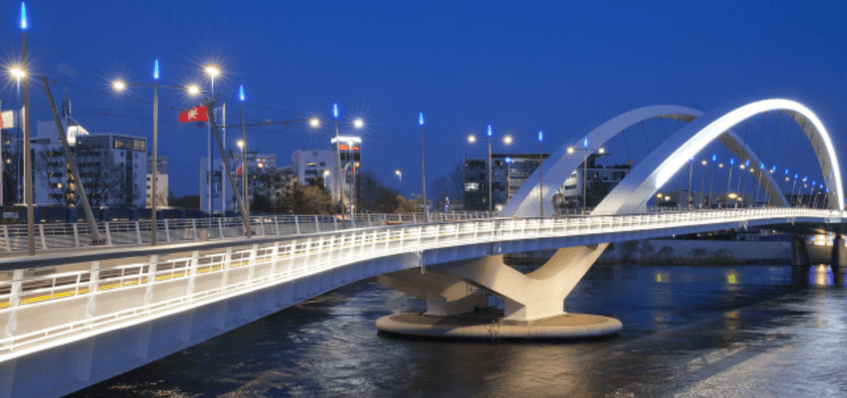
Business line: Bridges
Crossing the Rhone just upstream of its confluence with the Saone, the Raymond Barre bridge connects the Confluence and Gerland districts. Only open to trams, pedestrians and cyclists the tied-arch bridge is special in that it has a main span of 150 m at an angle to the river's flow, in echo of the metal Mulatière railway bridge that crosses the Saone nearby.
Seen from the banks and the A7 motorway, the Raymond Barre bridge is the new gateway to Lyon over the Rhone. Especially at night, when the lights installed by Bouygues Energies & Services enhance it slenderness twinned into the waters of the river.
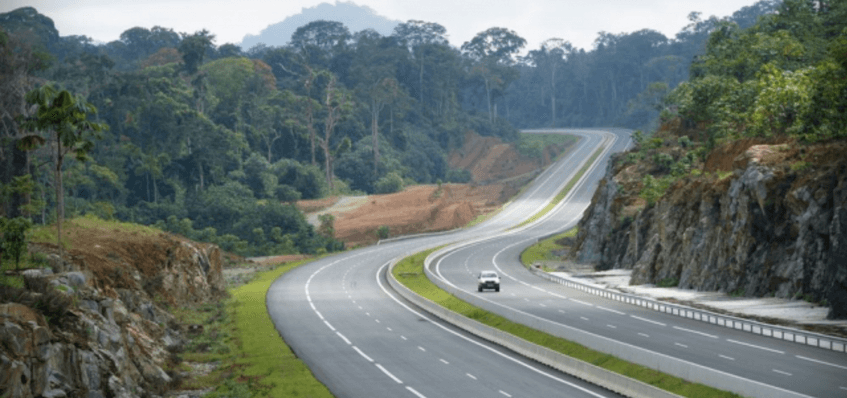
Business line: Linear Projects
Teams from Bouygues Bâtiment Equatorial Guinea, a joint subsidiary of DTP and Bouygues Bâtiment International, have built an 84-kilometre stretch of four-lane motorway linking the port city of Bata, in the west of the country, and Ayak Ntang, in the centre.
One of the biggest challenges to overcome was the geotechnical diversity of the terrain (marshes, mangrove swamps and a mountainous region to cross). 2,000 workers and 1,000 items of plant and equipment were required for this imposing project.
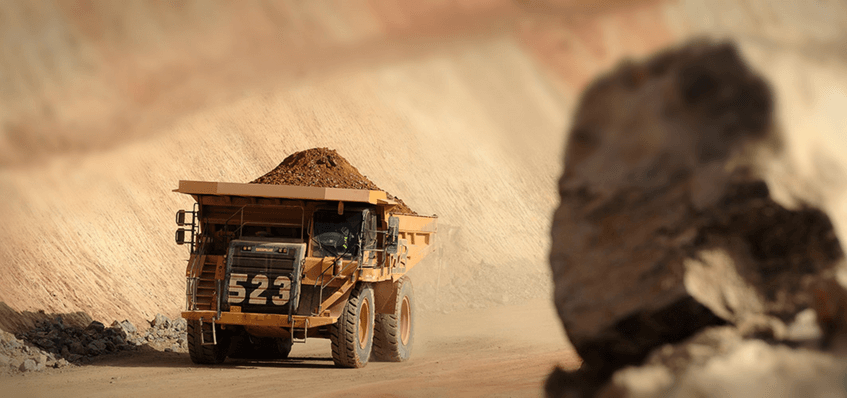
Business line: Mining
As an exclusive subcontractor of Barrick, DTP Mining has been responsible for mining and extraction work at the Gounkoto goldmine in Mali since 2011. The 12-year contract schedules the extraction of 165 million bcm of materials. Having operated in Mali since 2000, DTP Mining was previously responsible for: