Stopping alien invasions
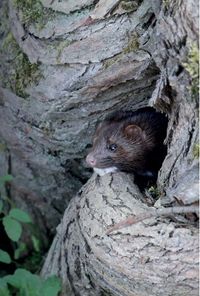
Our invasive non-native species (INNS) technical team provides specialist and integrated management services at all scales — from surveys and herbicide treatments on single sites to planning long-term management for major landholdings.
It is at the forefront of current research and plays a key role in developing best practice in the UK.
The team is supported by more than 120 AECOM ecologists, many with detailed INNS knowledge and experience, enabling AECOM Ecology to mobilise INNS teams for large-scale projects such as HS2.
AECOM ecologists work on many stages of small-, medium- and large-scale projects, delivering data and proposals through a number of specialist and industry-leading methodologies.
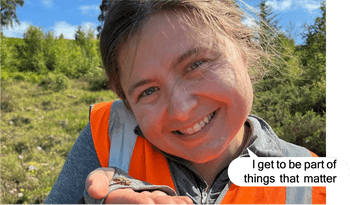
A large proportion of the work currently being done by the central England ecology team is advanced bat surveys on the HS2 project. Trapping, tagging and tracking bats provides far more robust and detailed datasets than traditional methods. This approach ensures that mitigation strategies on landscape-wide projects such as HS2 are more than just adequate in conserving the protected species within our environment.
Our ecologists use technology to benefit themselves and the environment; drones allow visual access to high risk sites and often identify the presence of key species, such as otter and water vole; thermal imaging cameras allow more accurate bat sightings with the use of fewer surveyors working throughout the night.
For graduates seeking a more desk-based career, the green infrastructure team brings together architecture, engineering and the ecological sciences to create landmark structures such as green bridges. Many of these impressive projects would not be possible without the graphics, visuals and virtual reality scenes created by our in-house visualisation teams.
"During the past year I have had the opportunity to serve as a WASH Corps mentor for a water supply project in Altamira, Bolivia with Engineers in Action – an NGO committed to building essential bridge and WASH infrastructure with communities in need and empowering university students to lead and learn on these projects." Rhiana, Environment, Water, Edinburgh