

Build across the AI stack
The future of AI won't be built by hardware alone. Or software. Or research. It takes all of them working together.
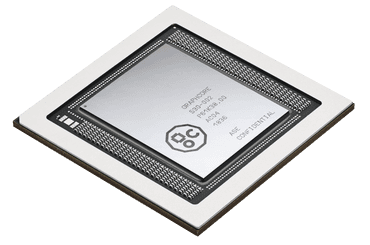
Our engineers collaborate across the entire AI compute stack - from silicon and hardware to software and AI applications.
You won't be expected to know everything when you join. What matters most is your curiosity, your ability to solve problems and your willingness to learn. We'll teach you the rest.
Four disciplines. One shared mission.
You've probably written software at university, but this is an opportunity to work much closer to the technology that powers it. Our software engineers develop the runtime, libraries and developer tools that enable AI workloads to run efficiently, solving challenging problems in C++, Python and performance engineering.
Working across the full AI stack, you'll help solve performance challenges that have a direct impact on how AI systems behave in the real world. It's software engineering with a level of depth and technical breadth that's difficult to find elsewhere.
If you enjoy solving engineering problems, hardware offers the chance to work on challenges you simply won't encounter at university. From designing efficient power delivery and cooling systems to enabling high-speed communication between complex components, you'll help turn ambitious ideas into technology that performs reliably at scale.
Hardware engineering is a team sport. You'll work alongside specialists in silicon, software and manufacturing, developing the technical depth and systems thinking that comes from understanding how every component fits together.
You may never have considered a career in silicon engineering, but for many of our graduates, that's exactly what makes it exciting.
Silicon engineering is where bold ideas become real hardware. From defining the architecture of next-generation processors to logical design, physical implementation, verification, and bringing first silicon to life, our Silicon engineers transform concepts into high-performance chips - they make innovation a reality.
It's meticulous, collaborative work where solving one problem often uncovers the next. If you enjoy analytical thinking, tackling complex challenges and continuously learning, silicon engineering offers a career many graduates only discover once they arrive at Graphcore.
University might teach you the fundamentals of how to build and train AI models. Here you'll go a step further – exploring how the latest state-of-the-art models interact with the software and hardware beneath them, and discovering new ways to make them perform even better.
You'll experiment with emerging techniques, optimise AI workloads at scale and explore how thoughtful engineering can unlock even better performance. If you're naturally curious and enjoy asking ‘Why does this work?’ as much as ‘Can I make it better?’, you'll fit right in.
Our graduates come from a wide range of STEM backgrounds – including computer science, electronic engineering, physics and mathematics – but what they have in common isn't a particular course. It's curiosity, problem-solving and a desire to understand how things work.
At Graphcore, you'll learn from experts, contribute to meaningful projects from the start and develop knowledge you simply can't gain in a lecture theatre.