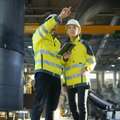


Integrating cybersecurity with digital and engineering solutions to modernise Scotland's transmission network
As transmission networks evolve to support more renewable energy and real-time data, they also become more complex and more vulnerable to cyber threats. For SSEN Transmission (SSEN), modernising the north of Scotland's electricity network means not only expanding capacity but ensuring critical infrastructure remains secure, reliable and resilient. Without robust cybersecurity embedded across systems, increased connectivity could expose operational technology environments to disruption, risking power reliability and slowing progress toward the U.K.'s energy security and decarbonisation goals. Through these frameworks, a more integrated approach becomes possible — bringing together cybersecurity, digital services and engineering experience to protect assets and enable smarter operations, while supporting the transition to a lower-carbon energy system.
Jacobs is delivering support across SSEN's Digital and Operational Technology Cyber Security Frameworks, combining engineering, cybersecurity and digital expertise to modernise critical transmission infrastructure. We're embedding cyber-by-design principles into substation environments through secure system architecture, network segmentation and real-time monitoring that strengthen protection across operational technology systems. Through the Digital Services framework, we're also applying AI-enabled digital and data solutions to improve asset management and operational insight in support of SSEN's RIIO-T3 transformation program. Together with PA Consulting, we're establishing a scalable digital backbone that supports network growth and strengthens the resilience of critical energy infrastructure across Scotland.

Beaulieu Park, the first new station on the Great Eastern Main Line in more than a century, opens early and on budget.
Chelmsford’s new Beaulieu Park Station gives passengers a 40-minute trip to London Liverpool Street and 25 minutes to Colchester, with customer-first amenities including step-free access, a bus interchange, 700 parking spaces and more than 500 secure, covered cycle spaces. It eases pressure on Chelmsford’s city center networks and supports growth in Essex and the east of England.
As Essex County Council’s rail adviser (through our Ringway Jacobs joint venture), Jacobs took a long-stalled idea and turned it into an operating station, opening ahead of schedule and on budget. The solution required reframing the challenge, reengineering the station plan and aligning the right stakeholders, funding and timetable to deliver a purpose-built station on one of Britain’s busiest corridors.
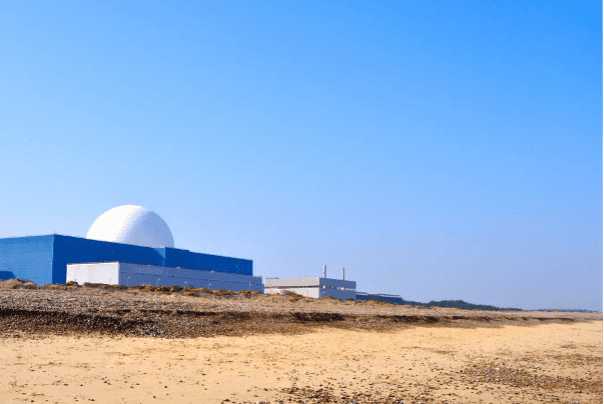
Providing integrated program and engineering delivery to enable reliable low-carbon electricity for six million U.K. homes.
As the U.K. works to decarbonise its energy system while demand for electricity continues to grow, securing reliable, low-carbon power has become critical. Without new baseload generation, the country risks greater dependence on imported energy, increased costs and reduced resilience across homes, businesses and industry. At the same time, the transition to net zero requires large-scale infrastructure capable of delivering consistent, carbon-free electricity for decades. Sizewell C — planned as a twin-reactor nuclear power station generating around 3.2 gigawatts of electricity — is designed to meet that need, supplying reliable low-carbon power for around six million homes. Through this nationally significant program, the U.K. can strengthen energy security while accelerating progress toward a cleaner, more resilient power system.
Jacobs was selected to support Sizewell C through its Professional Services Framework, providing program management and project delivery expertise for one of the country’s most important low-carbon energy developments. We will deliver strategic leadership and program integration as well as engineering and design support, establishing the governance, systems and delivery structures required to manage a complex, highly regulated nuclear project. By coordinating multidisciplinary teams and strengthening collaboration across the program, we’ll facilitate safe, efficient and integrated delivery as the project progresses — enhancing delivery capability and supporting thousands of jobs and apprenticeships. Ultimately, Sizewell C will deliver reliable low-carbon electricity and advance the U.K.’s long-term energy security and decarbonisation goals.

Over two decades, we’ve supported Crossrail to deliver the Elizabeth line, a complex and significant transport solution in London, U.K., that paves the way for social, environmental and economic opportunities of national significance that will last generations.
Delivered by Crossrail Ltd, the Elizabeth line is the most significant addition to London’s transport network in a generation. It's crucial to a low-carbon transport future, providing greater connectivity and supporting regeneration across the U.K.’s capital city.
One of the biggest railway infrastructure projects in Europe, this fully digitalised, 72-mile (118km) railway line will transform travel both east-west through London, interconnecting with the wider U.K.
Part of the Transport for London network, the Elizabeth line will increase connectivity for millions of people and enable an inclusive society through increased access to jobs and education. New, fully accessible stations transform the public realm, unlocking new development and housing opportunities.
We worked as a strategic partner, in an integrated team with our client Crossrail, overseeing several key contributions on this iconic mega project. Our people have provided over two decades of agile support, from our strategic consultants and economists in the conceptualisation stage, to our project teams on the mobilisation and delivery phases.
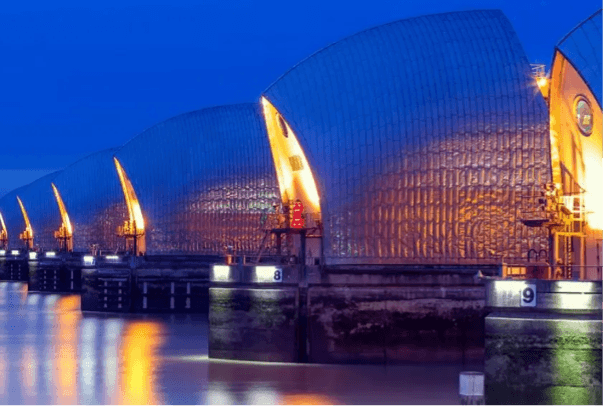
Major flood risk management program is working to provide better tidal protection to London and Thames Estuary.
Thames Estuary Asset Management (TEAM 2100) was set up by England’s Environment Agency to create a long-term approach to managing tidal flood defences in London and the Thames Estuary, including the iconic Thames Barrier. Jacobs is managing the first 10 years of the program.
Working collaboratively as an integrated delivery team with the Environment Agency and Balfour Beatty, our job is to plan, inspect, refurbish and improve flood defences along 330-kilometres of the River Thames and reduce the risk of tidal flooding to protect some 1.4 million people, over 4,000 different assets and over $396 billion (£321 billion) worth of property in London, Essex and Kent. This is part of the Thames Estuary 2100 Plan, which will adapt the riversides to rising sea levels over the next 100 years.
TEAM2100 advocates a programmatic approach to managing tidal flood defenses, aspiring to reduce the overall costs by seeking to invest in the right places at the right time. This major program also aims to deliver greater value for public money through innovation, and greater collaboration and joint planning with the supply chain. The program has maintained its ISO55000 asset management accreditation, reflecting an international standard for asset management.

Jacobs’ carbon cost analysis tool helps Heathrow align investment with emissions reduction — setting a global model for airport sustainability.
The aviation industry is at a pivotal moment. With increasing pressure from consumers and governments to decarbonise, airports around the world are seeking tangible, impactful solutions. Heathrow — “Britain’s Aviation Hub” and a global leader in aviation — isn’t just setting ambitious net-zero targets. It’s actively working to achieve them through a robust, data-driven approach that is redefining airport decarbonisation.
At the centre of this effort is the digital Marginal Abatement Cost Curve (MACC) tool, developed by Jacobs in collaboration with Heathrow. Central to Heathrow’s Carbon and Sustainability Program, this tailored aviation model goes beyond traditional sustainability reporting. It’s an interactive dashboard that connects financial investment directly to quantifiable carbon savings (£/tCO₂e) over a project’s lifecycle — supporting program-wide prioritisation.
Heathrow’s adoption of this digital model sets a new standard for airports globally. The principles and capabilities behind the Jacobs MACC tool are scalable and transferable, offering a roadmap for other major airports pursuing net-zero goals.
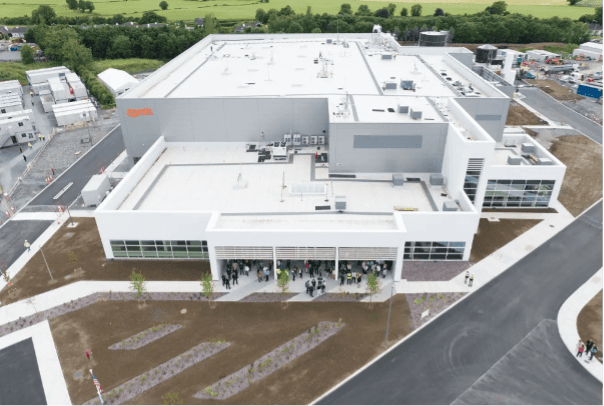
Providing speed-to-market through innovative EPCM delivery.
In 2021, Zoetis commissioned an expansion to its biotech manufacturing and development facility in Tullamore, Ireland to increase production capacity for single-use monoclonal antibody (mAbs) for veterinary medicines. As the animal health industry is a cost competitive market, on-time, on-budget quality design and construction was instrumental for Zoetis to achieve an earliest possible product-to-market date. Jacobs was selected to provide engineering, procurement and construction management (EPCM) services for the expansion project, utilising an Integrated Project Delivery (IPD) model for the greatest schedule savings.
Through the lean-inspired IPD execution approach, Jacobs promoted collaborative behaviour between delivery stakeholders and drove greater efficiency, resulting in the project achieving all schedule, quality and cost targets in 23 months.
The Greenfield 8,500 square meter (9,150 squarefeet) facility (and associated ancillary site) site within the Srah Business and Technology Park incorporates functional areas to support production, laboratories, utilities, administration and warehousing spaces. The facility produces Zoetis’ recombinant monoclonal antibodies Solensia and Librela for the animal healthcare market and is now poised to support 80-100 new high-quality jobs in the local economy.

Scotland’s largest infrastructure project for a generation, the Forth Replacement Crossing is safeguarding one of the most vital connections in the transport network.
The stunning and record breaking Queensferry Crossing, the world’s longest three tower cable stayed bridge, forms the centrepiece of Transport Scotland’s major upgrade to the strategic road corridor that connects Edinburgh to Fife and the north of Scotland. 23,000 miles of cabling, almost enough to wrap around the circumference of the Earth, connects the bridge deck to the towers.
Developed to dramatically improve journey reliability, the new and upgraded motorway associated with the Queensferry Crossing encompasses innovative technologies that seek to improve traffic flow, operational safety, air quality and accessibility within region through provision of an Intelligent Transport System. The Queensferry Crossing, encompassing wind shields to provide greater operational reliability, replaces the Forth Road Bridge as the principal road crossing of the Firth of Forth, the old bridge serving as a dedicated public transport corridor for use by buses, taxis, motorcycles, pedestrians and cyclists.
Jacobs, as lead partner in the Jacobs Arup Joint Venture, supported Transport Scotland from the earliest stage of development. Co-locating with the client to form an integrated Employer’s Delivery Team from the outset enabled delivery of the design and assessment process that led to the realisation of the “managed crossing scheme”. The team supported the development of the Parliamentary Bill that resulted in the Forth Crossing Act, providing the powers required to construct the project. It also managed procurement of the three main design and build construction contracts, and effective compliance monitoring activities during the construction phase which commenced in 2011 and resulted in the opening of the Queensferry Crossing in 2017.
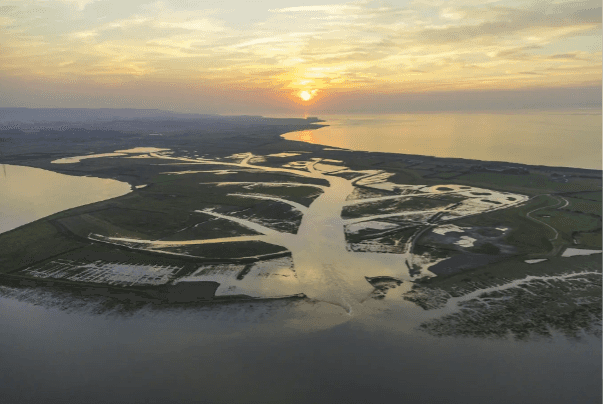
One of the U.K.'s largest coastal management schemes, Steart is an example of working with nature to restore habitats, mitigate flood risk and respond to climate change.
The Steart Peninsula is an exposed section of coast in Somerset, south-west England, next to the Severn Estuary, vulnerable to flooding from the River Parrett at the point where it meets the sea. Jacobs was brought in as the lead consultant by the Environment Agency to design and ultimately supervise the construction of new wetlands to provide flood protection, biodiversity enhancements and recreational benefits.
The success of the project was recognised by multiple awards:

The Lower Thames Crossing is being designed as the greenest ever road built in the U.K. to connect Kent, Thurrock and Essex through a new tunnel beneath the River Thames.
The Lower Thames Crossing will form a vital part of the U.K.'s transport infrastructure, and the areas it will serve are home to economic hubs, key U.K. ports and thriving communities. It will help businesses large and small to grow and bring people and communities closer to jobs, education and leisure opportunities.
The new road will almost double road capacity across the River Thames, east of London. The 70mph crossing and the new connecting road network will provide, quicker, safer and more reliable journeys locally, regionally and nationally.
The new crossing is being designed as the greenest road ever built in the U.K. As a pathfinder project, it is exploring carbon neutral construction that will enable the sector to continue to deliver vital infrastructure and play its role in helping the U.K. reach net zero by 2050 and leave a legacy of green skills in the region.
It will connect people to nature with a new community woodland, two public parks, seven green bridges and almost 40 miles of new and improved pathways for walkers, cyclists and horse riders.