
As grid-connected Battery Energy Storage Systems (BESS) become larger and more complex, early technical clarity is essential. Voltage performance, fault level contribution, harmonics and reactive power capability can quickly determine whether a project progresses smoothly or faces delays during grid approval.
EPS supported a 200 MW Battery Energy Storage System located in Central Scotland, delivering a comprehensive Front-End Engineering Design (FEED) package, along with detailed G5/5 harmonic assessments and G99 reactive power compliance studies. Using advanced power system modelling, EPS assessed system performance under normal operation and contingency scenarios, identified harmonic resonance constraints, and provided a clear technical basis for mitigation strategies and informed DNO engagement.
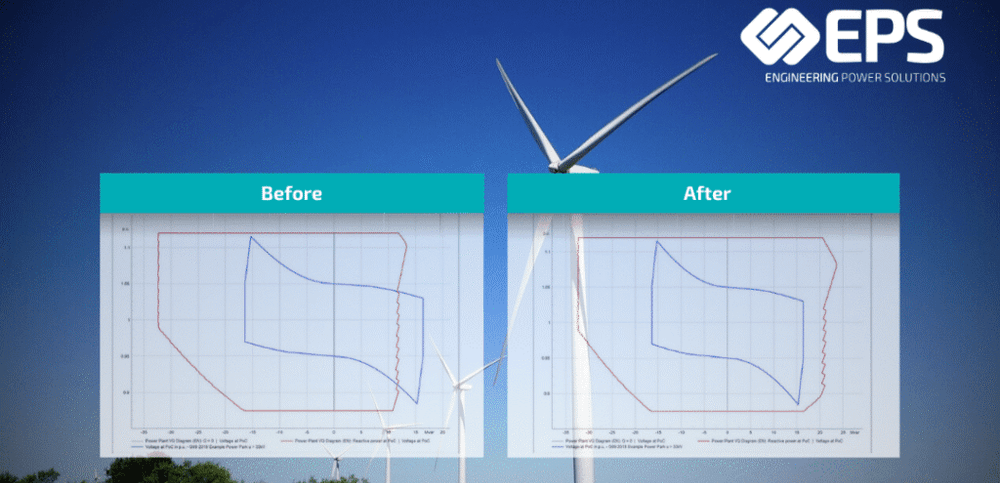
Our Power Systems team supported a developer in Scotland with a 50 MW onshore wind farm, delivering a comprehensive suite of grid compliance studies. This included reactive power capability, voltage stability, fault ride-through (FRT) and frequency response assessments.
In our analysis, we highlighted issues with reactive power performance under lagging conditions. Via DIgSILENT, we were able to model the issue and provide a clear solution to improve the asset’s reactive power capability and extend the wind farm’s operating range to meet both V-Q and P-Q requirements in full.
Subsequent studies demonstrated that the wind farm could respond effectively to voltage changes and remain connected during a range of fault conditions. For the client and the DNO, this meant confidence that the project could move forward as planned without the stress of costly redesigns or delays.
This project is one of many where our detailed analysis and practical solutions have enabled renewable schemes to achieve grid readiness.
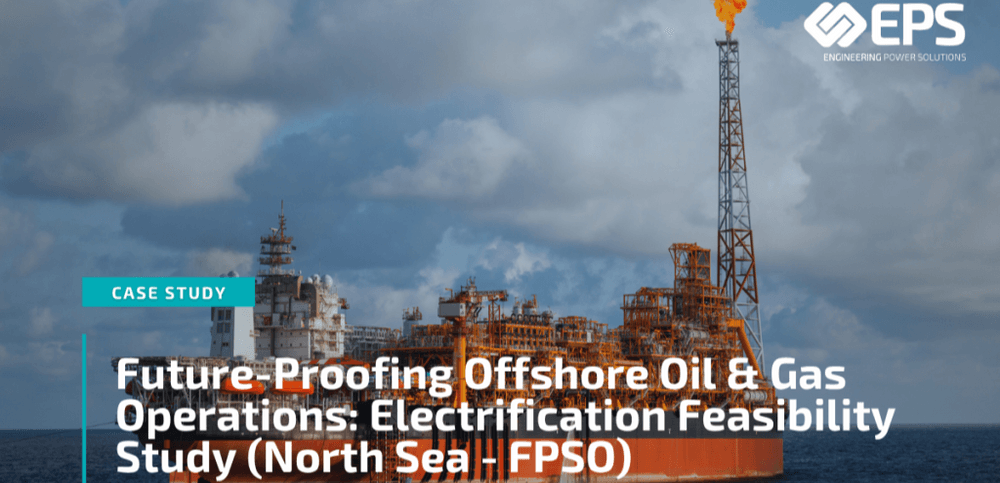
The UK’s 2030 decarbonisation targets are rapidly approaching, placing increasing pressure on offshore operators to reduce emissions from existing assets. Diesel-powered FPSOs continue to face increasing operational costs, emissions pressures and decarbonisation requirements across the UK Continental Shelf.
EPS evaluated 53 potential offshore electrification concepts before progressing four solutions into detailed Pre-FEED assessment for a North Sea FPSO operating within the UK Continental Shelf. The objective was to evaluate the import of onshore electrical power via a subsea transmission and electrical distribution system. However, the conclusion is generally the same, driven by high installation costs that far exceed the operational life of the oil field coupled with high electricity prices.
With Middle Eastern and Norwegian assets moving to electrification it appears that North Sea operators are behind the curve, possibly due to the UK’s high taxation for oil & gas production and high electricity costs.
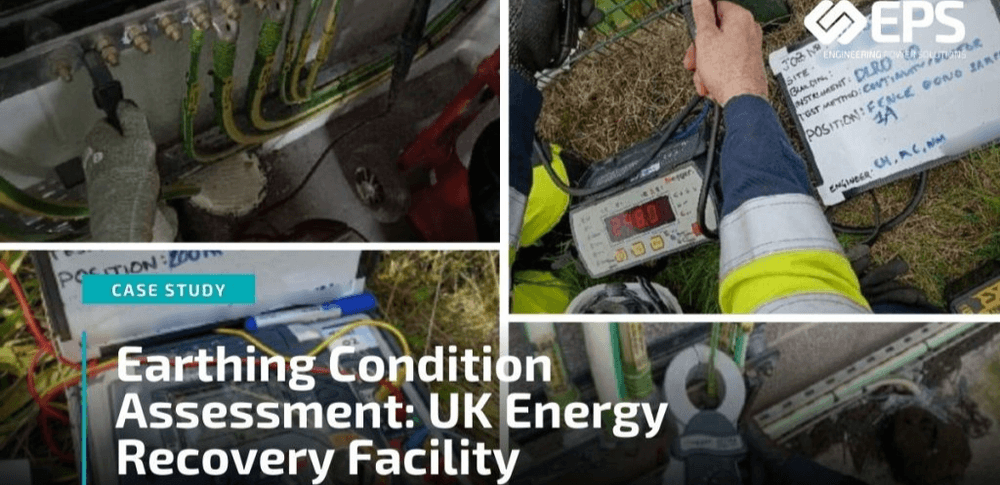
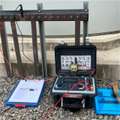
Earthing systems can deteriorate over time due to corrosion, environmental conditions and ageing infrastructure, potentially introducing dangerous touch and step voltage risks if left unidentified. EPS was engaged to carry out a comprehensive condition assessment of the interconnected HV and LV earthing systems at a major UK energy recovery facility.
Over a five-day site investigation, our earthing specialists completed detailed earth resistance testing, continuity testing, soil resistivity assessment and fence bonding evaluations to assess the integrity of the existing system.
While the primary earthing system performed effectively, EPS identified several bonding failures caused by corrosion, degradation and missing conductors. Our team developed a clear remedial action strategy to help the client maintain compliance, improve site safety and reduce operational risk.
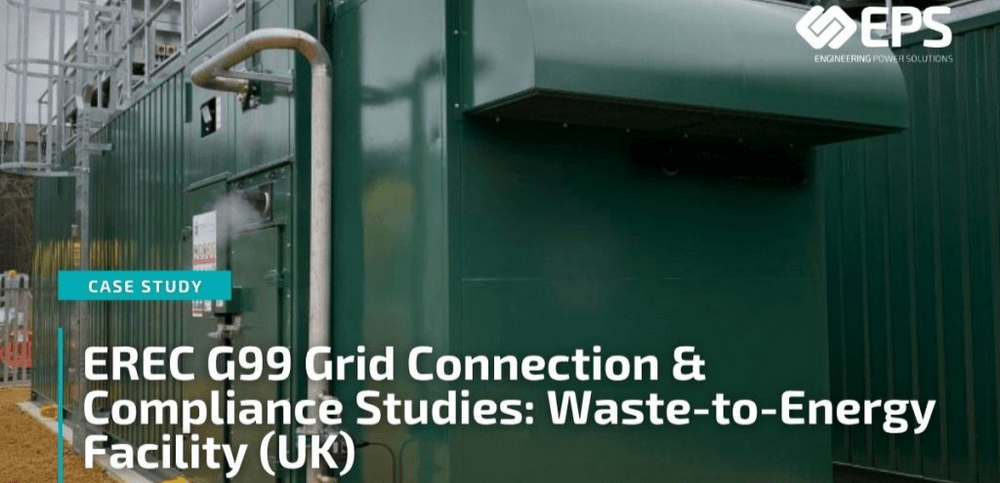
Successful generator connections require detailed technical studies to demonstrate compliance with network planning standards and ensure reliable integration with the electricity system.
EPS supported a UK waste-to-energy facility with the integration of a new 2.9 MVA ORC synchronous generator into its 11kV distribution network by delivering a comprehensive package of grid connection and compliance studies.
Using detailed simulations within DIgSILENT and ETAP, our engineers assessed system performance under fault, harmonic and frequency conditions while evaluating voltage fluctuation and flicker impacts in accordance with P28 requirements.
The studies demonstrated compliance with EREC G99, P28 and G5/5 requirements, validating the generator’s ability to operate reliably under fault, frequency and harmonic conditions while supporting long-term integration within the UK distribution network.

Effective earthing design is critical for ensuring personnel safety, equipment protection and long-term operational reliability within power generation facilities. EPS has supported a range of UK power generation projects by delivering detailed earthing system design, modelling and assessment services for HV infrastructure.
Using specialist modelling software and detailed soil resistivity analysis, our engineers assessed fault current distribution, touch and step voltages, grid resistance and conductor sizing requirements to develop compliant and practical earthing solutions. The studies confirmed the site could be classified as “COLD” prior to energisation while supporting the development of a compliant earthing grid design.
The resulting designs helped clients minimise safety risks, satisfy industry standards and support successful project delivery across complex generation environments.
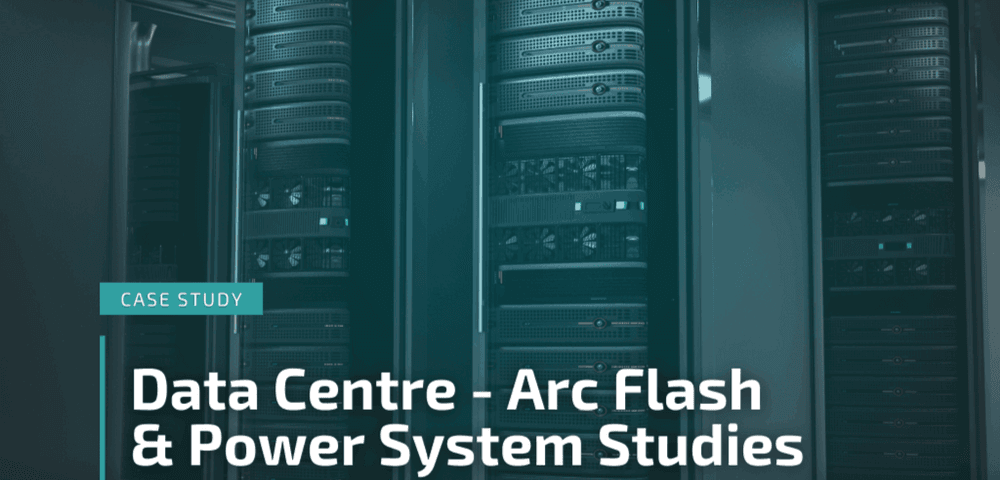
Reliable electrical infrastructure is essential for data centre operations, where power system failures can result in major operational disruption and safety risks.
EPS supported the development of a major African data centre project by delivering a comprehensive suite of MV and LV power system studies focused on protection coordination, fault analysis and arc flash risk reduction. The studies were completed in accordance with IEC 60909 and IEEE 1584 methodologies.
Our engineers completed detailed load flow, short circuit and protection coordination studies to validate system performance under both normal and fault conditions. EPS also carried out detailed arc flash studies to calculate incident energy levels, assess personnel safety risks and recommend enhanced protection settings and PPE requirements in accordance with IEEE 1584 guidance.
The studies helped ensure the electrical system could operate safely, reliably and in accordance with international engineering standards.
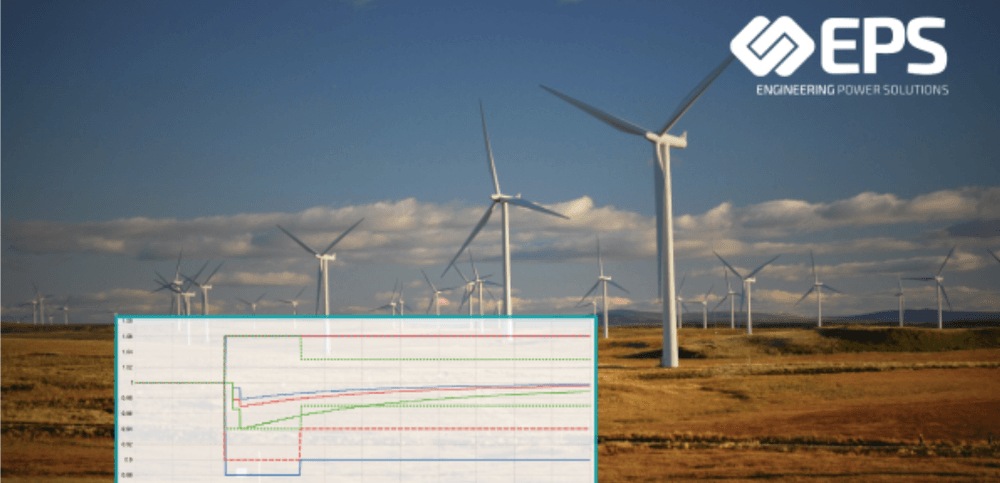
Transformer energisation can introduce significant transient voltage disturbances onto the network, particularly within renewable energy projects where large transformers and multiple turbines are connected across collector systems. Without detailed transient assessment, energisation events can create operational restrictions that remain with the asset throughout its lifecycle.
EPS supported a UK onshore wind farm project by assessing the energisation behaviour of a 132/33 kV, 60 MVA grid transformer prior to commissioning.
The study evaluated worst-case switching scenarios, sympathetic inrush interactions across a 12-turbine collector network and compliance with Engineering Recommendation P28 at the 132 kV point of connection.
Using detailed electromagnetic transient modelling, EPS identified that uncontrolled energisation scenarios could exceed P28 planning thresholds under certain operating conditions, particularly under residual flux conditions.
EPS subsequently developed a controlled energisation strategy that reduced transient voltage disturbance levels and improved operational flexibility during commissioning and long-term operation.
Over a five-day site investigation, our earthing specialists completed detailed earth resistance testing, continuity testing, soil resistivity assessment and fence bonding evaluations to assess the integrity of the existing system.
While the primary earthing system performed effectively, EPS identified several bonding failures caused by corrosion, degradation and missing conductors. Our team developed a clear remedial action strategy to help the client maintain compliance, improve site safety and reduce operational risk.
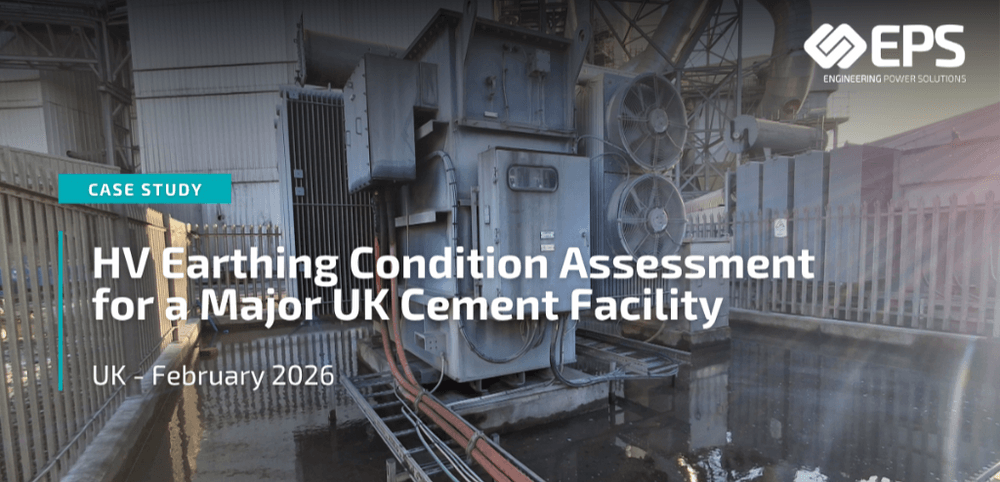
Effective HV earthing systems are critical for maintaining personnel safety, fault protection performance and operational reliability across heavy industrial facilities. However, ageing infrastructure and deteriorated below-ground earthing systems can introduce significant electrical safety and compliance risks if left unidentified.
EPS carried out a comprehensive HV earthing condition assessment at a major UK cement production facility operating within a live industrial environment, where no shutdown or electrical isolation was available during the investigation.
Testing identified that the site relied primarily on the adjacent DNO substation for earthing, with no dedicated local functioning earthing system in operation. EPS subsequently identified multiple earthing and bonding deficiencies across the site, including credible electric shock risks under fault conditions.
Following detailed site testing and soil resistivity assessment, EPS developed a prioritised remedial action strategy and earthing design recommendations to support long-term compliance, operational safety and risk reduction while maintaining plant operation.
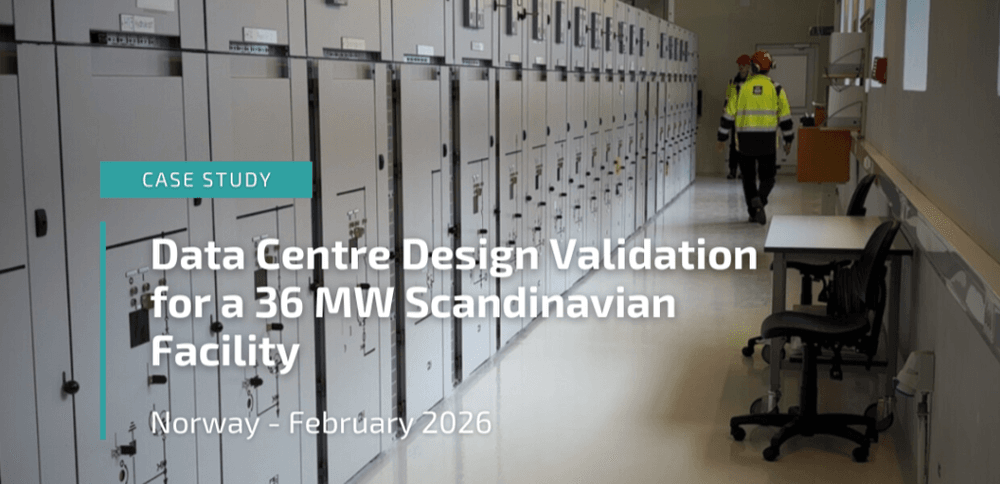
In large-scale data centre infrastructure, the most demanding network conditions often occur during abnormal or contingency operation rather than during normal system loading. Without detailed design validation, hidden constraints may only emerge during commissioning or live operation.
EPS supported the development of a 36 MW Norwegian data centre facility by carrying out a comprehensive programme of power system design validation studies across multiple operating scenarios.
The study assessed fault levels, protection coordination, transformer and cable thermal loading, voltage performance and contingency operation under both maximum and minimum demand conditions.
Detailed modelling identified that fault levels could exceed RMU ratings when transformers operated in parallel under contingency conditions.
EPS subsequently supported the resolution of the constraint, allowing the remaining operating scenarios to remain within voltage limits, thermal ratings and intended protection coordination requirements.