
Added: Over a year ago by Buro Happold
To truly understand someone, look to their work. The built environment is special for many reasons, but primary among them is the opportunity to make a genuine – often, physical – impact on the world. There is no building, area of public realm or city in the world that hasn’t been shaped and influenced by engineers, architects, designers or planners.
For International Women in Engineering Day, meet women across Buro Happold who are making their mark on the built environment through the work that they do.
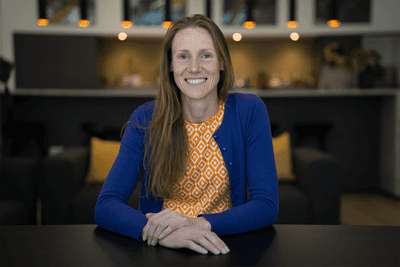
Christine Lowry is an advocate for thinking holistically when approaching a new project.
Christine Lowry is an advocate for thinking holistically when approaching a new project. Originally an MEP engineer, in recent years Christine’s work has been on the boundary of sustainability, building performance and building services. Christine joined Buro Happold in 2001 and became a partner in 2021.
As someone with demonstrable experience across the built environment, and as a senior leader within the practice, she can understand that the ability to take a step back and look at the big picture of a project – with many competing requirements – is critical to success. This is especially true for projects that are unique, a little different or downright bespoke.
The British Library at Boston Spa is a case in point. This project is a one-off – and because of who the client is and what it will achieve, holds a little magic.
The British Library is the national library of the United Kingdom. Its headquarters is a well-known building in its own right and is found right next to King’s Cross St Pancras railway station in London. But many people do not know that there is a lot more to the library than its famous red brick frontage in the capital city.
Hidden away in Boston Spa, Yorkshire, is over 70% of the library’s catalogue. It is here that Christine and a team from Buro Happold are changing the way in which the precious collection is stored, as well as transforming the offices of the staff who work there. A brand-new automated store will be created, which uses passive climate control in place of traditional energy intensive methods to preserve the materials inside.
Buro Happold is providing acoustics, building services (MEP) engineering, ground engineering and sustainability services to the British Library at Boston Spa project.
The site in Boston Spa includes a reading room, but what is striking is the amount of materials safely kept there. To do this, there are currently two large, automated storage facilities – and a third one is being built. Perhaps unsurprisingly, attention has been paid to the sustainability side of this new facility.
Christine said, “There has been an interesting evolution of the approach to sustainability and energy use. For earlier storage facilities, the approach was about densifying the collection, which was quite energy intensive as it needed to nail specific environmental conditions.
“But now, the approach is that slow temperature fluctuations (within reason) are acceptable. That means we don’t need as much energy and there are no heating, ventilation or air conditioning systems in there”. These passive design choices have a huge impact on the amount of energy required.
Spanning 80m x 40m, and reaching 28m in height, the new automated store will house nine aisles of cranes. The automation is a key element. Christine said, “A building where someone has to physically go and get a book, even one with dense racking to store all these materials, is really inefficient in terms of footprint. The automation that is being implemented now is bringing that cost right down.
“The British Library is right at the forefront of thinking – and building – efficiently.”
In her time at Buro Happold, Christine has worked on a wide range of projects, and knows the importance of working in collaboration with clients. She said, “None of us can achieve excellent work on our own. What is really fun and enjoyable on projects like this is the fact that you absolutely have to work in collaboration with the client and the rest of the design team.”
The idea of collaboration extends to a diversity of people within Buro Happold, and the wider built environment industry. Christine has been at Buro Happold since 2001 and was made a partner in 2021. As such, her views on the role of women within engineering and the built environment are noteworthy.
She said, “I’ve never viewed myself as a ‘female engineer’: I’m an engineer. As long as I have the answers, that is what counts. That said, I totally acknowledge the importance of having women in senior roles.
“This is something that Buro Happold takes seriously and is a challenge I think about often. How do we keep colleagues moving through their careers, and keep them motivated and contributing their great skills? I hope that by being here, in my role, I can show that there is a path – and many people willing to help you walk it.”